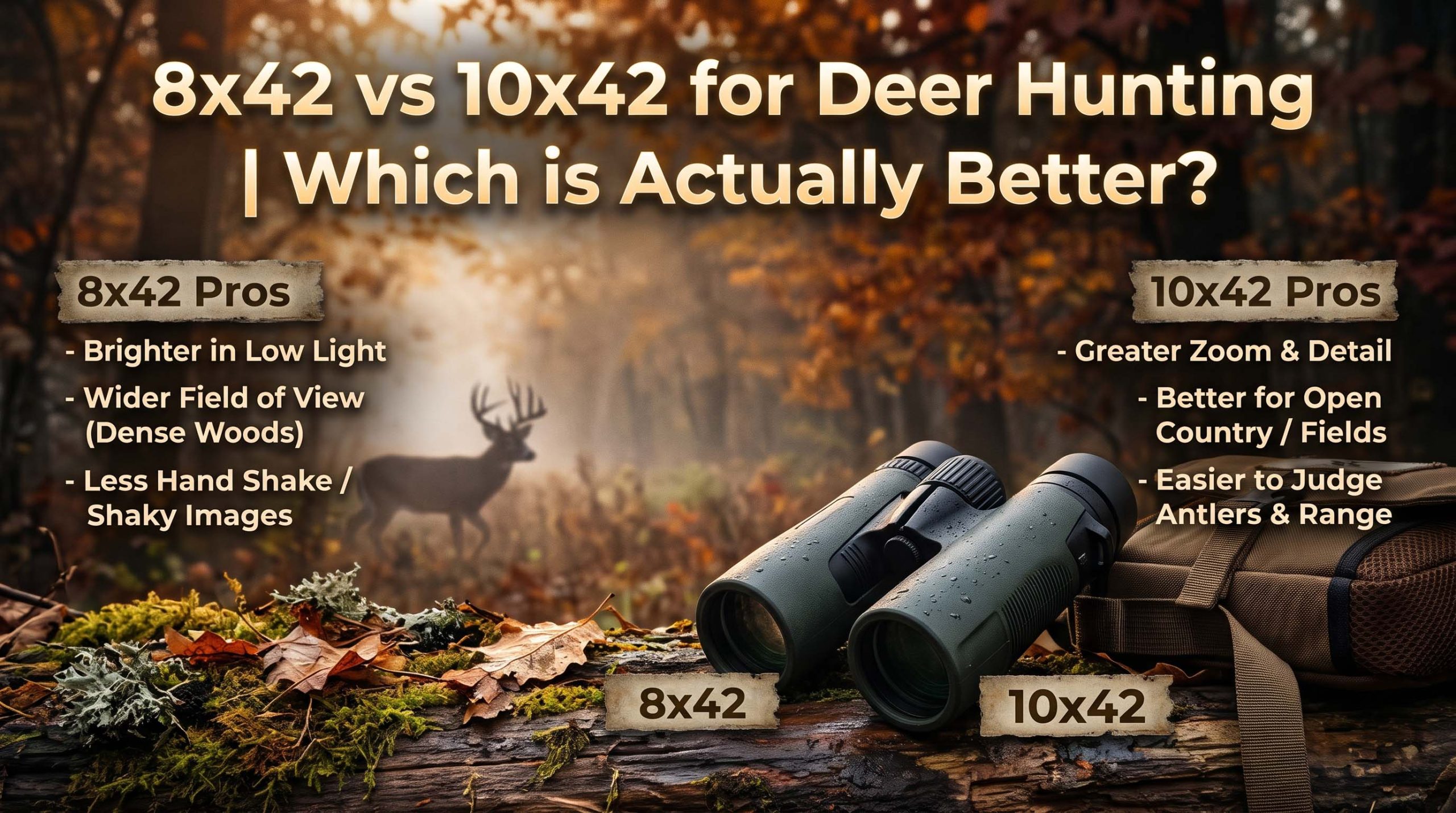
If you’re searching for 8×42 vs 10×42 for deer hunting, you already know the basics. You know the 8 is wider and the 10 gets you closer. What you don’t know is which choice will actually make you a better hunter when the light is fading and a buck appears at 80 yards. I was in your shoes not long ago, stuck between two very good options.
Here’s the short answer on 8×42 vs 10×42 for deer hunting: For the vast majority of deer hunters, the 8×42 is the better all-around tool. It wins where it counts, in the low light of dawn and dusk, and in the tight quarters where a buck can show up anywhere. But the 10×42 has its place, especially if you’re hunting open country or powerline cuts.
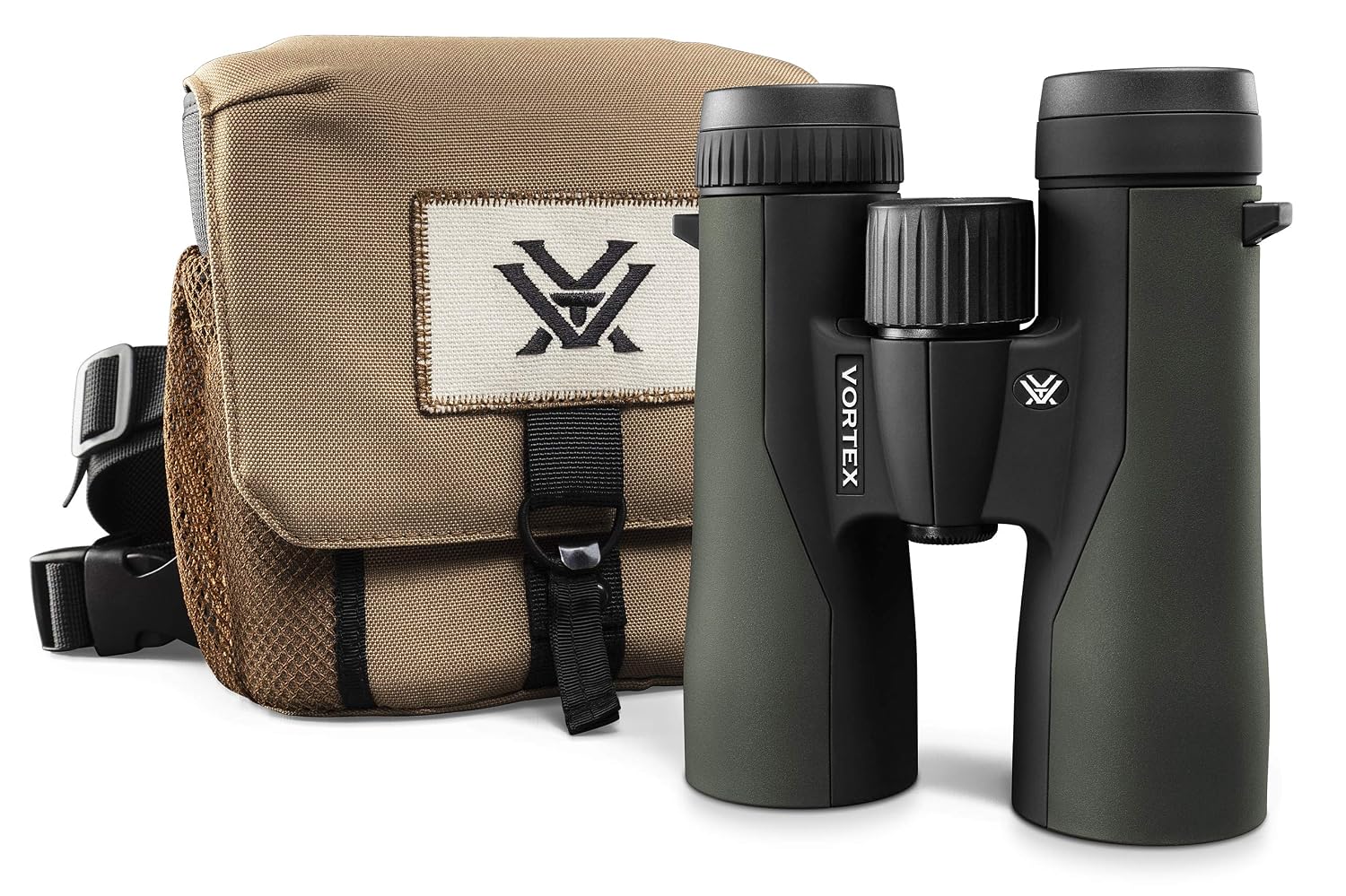
We’re comparing two specific Vortex models here: the Vortex Diamondback HD 8×42 and the Vortex Crossfire HD 10×42. The Diamondback is a higher-tier optic with better glass, while the Crossfire is an incredible value with more reach.
This creates an interesting tension: do you spend for better glass in an 8x, or get the extra magnification of a 10x for less money? Let’s walk through it.

Why the 8×42 vs 10×42 Debate Matters for Deer Hunting
Before we dig into the specific models, it helps to understand why this magnification debate exists in the first place. These aren’t just random specs that gear nerds argue about. They directly affect how you hunt and what you see in the critical moments.
Exit Pupil and the Dusk Factor
This is the single most important piece of science for a deer hunter to understand. Your eye’s pupil dilates in low light, usually to around 5mm. The 8×42 has a 5.25mm exit pupil, which means it matches your eye almost perfectly.
The 10×42 has a 4.2mm exit pupil. You are physically seeing a dimmer, less confident image through the 10x.
I remember a hunt last year where I couldn’t confirm a buck’s tines through my 10x bin at dusk. My buddy with his 8x called the shot without hesitation. That difference in usable light is real.
Field of View and Target Acquisition
A deer doesn’t give you a 30-second heads-up in a field. He materializes in a gap in the brush. The 8×42 provides a significantly wider field of view. You find the deer faster, and you track him more easily when he’s moving.
The tighter FOV of the 10x can feel like looking through a paper towel tube when you’re trying to follow a deer walking through thick cover.
The Stability Problem
Hand shake is part of hunting. You get cold, you get a little adrenaline, or you’ve been glassing for an hour straight. Ten-power magnifies that shake. It’s not unmanageable, but it fatigues your eyes and arms faster.
The 8x is inherently steadier, which means you see more detail in the real world because the image isn’t bouncing around.
The 8×42 Diamondback HD — My All-Around Pick for Deer Hunting
This binocular is the embodiment of everything I just described. It’s the safer, more versatile choice for the hunter who wants one pair of glass to rule all their hunting.
The Diamondback HD line is a step above the Crossfire in terms of optical quality, and it shows the moment the sun starts to drop.
Key Specs
- Magnification: 8x
- Objective: 42mm
- Prism Coating: Dielectric
- Purge Gas: Argon
- Lens Coating: Armortek
- Harness: GlassPak included
- Warranty: VIP Lifetime
Strengths
The big advantage here is the dielectric coating on the prisms. This is the premium coating that really boosts light transmission. On a foggy November morning, the view through the Diamondback is noticeably brighter and more detailed than the Crossfire.
The fully multi-coated lenses and the dielectric coating work together to create an image that feels a full step up in quality.
The Armortek coating is a huge deal for a brush hunter. It’s a durable layer on the outside of the lenses that resists scratches, oil, and water.
I’ve wiped sap, rain, and mud off these things countless times without a single scratch. It gives you the confidence to just use them without babying them.
Argon purging is a step above the nitrogen you find in cheaper bins. The gas is denser, which means it does a better job at preventing internal fogging when you go from a cold truck to a warmer stand. I’ve never had a hint of fogging with this pair.
The included GlassPak harness is a genuine bonus. A good harness is mandatory for carrying a hunting binocular all day. This one saves you from dropping another forty bucks on a separate piece of gear.
Honest Weaknesses
The biggest trade-off is weight. The argon purging and the thicker build for durability add some heft.
It won’t win any ultralight awards, but it balances nicely in the hand. The price is also higher than the Crossfire, which might push it out of reach for some hunters on a tight budget.
Who This Is For
The hunter who wants one binocular to do it all. Perfect for timber, field edges, mixed terrain, or anyone who values seeing deer in those crucial last minutes of light over squeezing out a bit more magnification.
The 10×42 Crossfire HD — A Specialist Tool for Open Country
The Crossfire HD is the binocular that introduced a lot of hunters to quality Vortex glass. It’s the entry point, and for good reason.
It gives you a fully multi-coated HD optic with the same legendary VIP warranty as the flagship models. This is the 10x option you buy when your budget is tight, or your terrain is wide open.
Key Specs
- Magnification: 10x
- Objective: 42mm
- Prism Coating: Standard
- Purge Gas: Nitrogen
- Lens Coating: Fully Multi-Coated
- Warranty: VIP Lifetime
Strengths
The price is the headline here. You get a fully multi-coated HD optic from a trusted brand for significantly less than the Diamondback. That frees up budget for a rangefinder or a better pack.
The 10x reach is a real asset in specific scenarios. If you’re glassing a 200-yard powerline cut or a big ag field, that extra magnification helps you count points and make decisions without having to close the distance. It pulls the deer into your world.
The VIP Lifetime Warranty is the same one that backs all Vortex products. It’s transferable and doesn’t require a receipt. This removes almost all the risk of buying a budget optic. If you break them, you send them in. Simple as that.
Honest Weaknesses
The low light performance is the biggest compromise. The 4.2mm exit pupil is noticeable. The image goes dimmer faster than the Diamondback. If you hunt the last 15 minutes of legal light, this matters.
The field of view is also noticeably tighter, which makes it harder to find deer in thick brush quickly. The standard prism coatings and nitrogen purging just don’t match the specs of the more expensive Diamondback.
Who This Is For
The budget-conscious hunter. The guy who needs a pair for the truck. The dedicated Western spot-and-stalker who wants a lightweight, powerful glass for open country. This is not the best choice for thick timber or low-light specialists.
Head-to-Head: Diamondback HD 8×42 vs Crossfire HD 10×42
Here is the direct comparison between the two. If you are trying to make a final decision, this table lays out exactly where each binocular wins and why it matters for deer hunting.
| Feature | Winner | Why It Matters for Deer |
|---|---|---|
| Magnification | Tie (Use Case) | 10x wins open country. 8x wins everywhere else. |
| Low Light | Diamondback 8×42 | 5.25mm exit pupil vs 4.2mm. Huge difference at dusk. |
| Field of View | Diamondback 8×42 | Wider FOV makes finding deer in brush much easier. |
| Build Quality | Diamondback 8×42 | Armortek coating + Argon purging = higher durability. |
| Price | Crossfire 10×42 | Significantly less expensive. |
| Warranty | Tie | Both have the unbeatable VIP Lifetime Warranty. |
Final Verdict | Which Vortex Should You Buy for Deer Hunting?
No hedging. If you want a straight answer, here it is.
If you buy one binocular right now:
Winner: Vortex Diamondback HD 8×42. It’s the more versatile, safer choice. It delivers the brightest image when it matters most, is easier to hold steady, and has a wider field of view. You will not regret buying this binocular for deer hunting.
If you choose the 10×42:
Winner: Vortex Crossfire HD 10×42. It’s the smarter choice for the budget hunter or the open-country specialist who needs that extra reach for power lines or big fields. You get a fantastic warranty on a high-value optic.
The Takeaway: The Diamondback 8×42 is for the hunter who wants one binocular to rule them all. The Crossfire 10×42 is for the hunter who knows exactly where they hunt and needs that extra reach or a lower price point. Match the tool to your terrain, and you will be happy with either.
Quick Answers to Common Questions
Which is better for deer hunting in thick woods, 8×42 or 10×42?
In thick woods, the 8×42 is almost always the better choice. The wider field of view helps you pick up deer appearing in gaps, and the steadier image is easier on the eyes during long sits.
Is the Diamondback HD worth the extra money over the Crossfire HD?
For most serious deer hunters, yes. The improved low-light performance and the durable Armortek lens coating are genuine advantages that change the way you hunt, especially in the final minutes of legal shooting light.
What does the Argon purging in the Diamondback HD do?
Argon gas is denser than nitrogen. Purging the binocular with Argon provides better internal temperature stability and superior fogproofing compared to the standard nitrogen purging found in the Crossfire.
It helps prevent the binoculars from fogging up when you move between cold and warm air.
Can I use a 10×42 for deer hunting if I mostly hunt fields?
Yes. If you primarily hunt powerlines, ag fields, or wide-open land, a 10×42 is a great choice. The extra magnification helps you count points and identify deer at longer distances. The Crossfire HD 10×42 is a strong option in this scenario.
What is an exit pupil and why does it matter?
The exit pupil is the diameter of the beam of light that exits the eyepiece. You calculate it by dividing the objective lens diameter by the magnification. A larger exit pupil (over 5mm) is ideal for low-light hunting because it matches the dilation of the human eye in dim conditions.