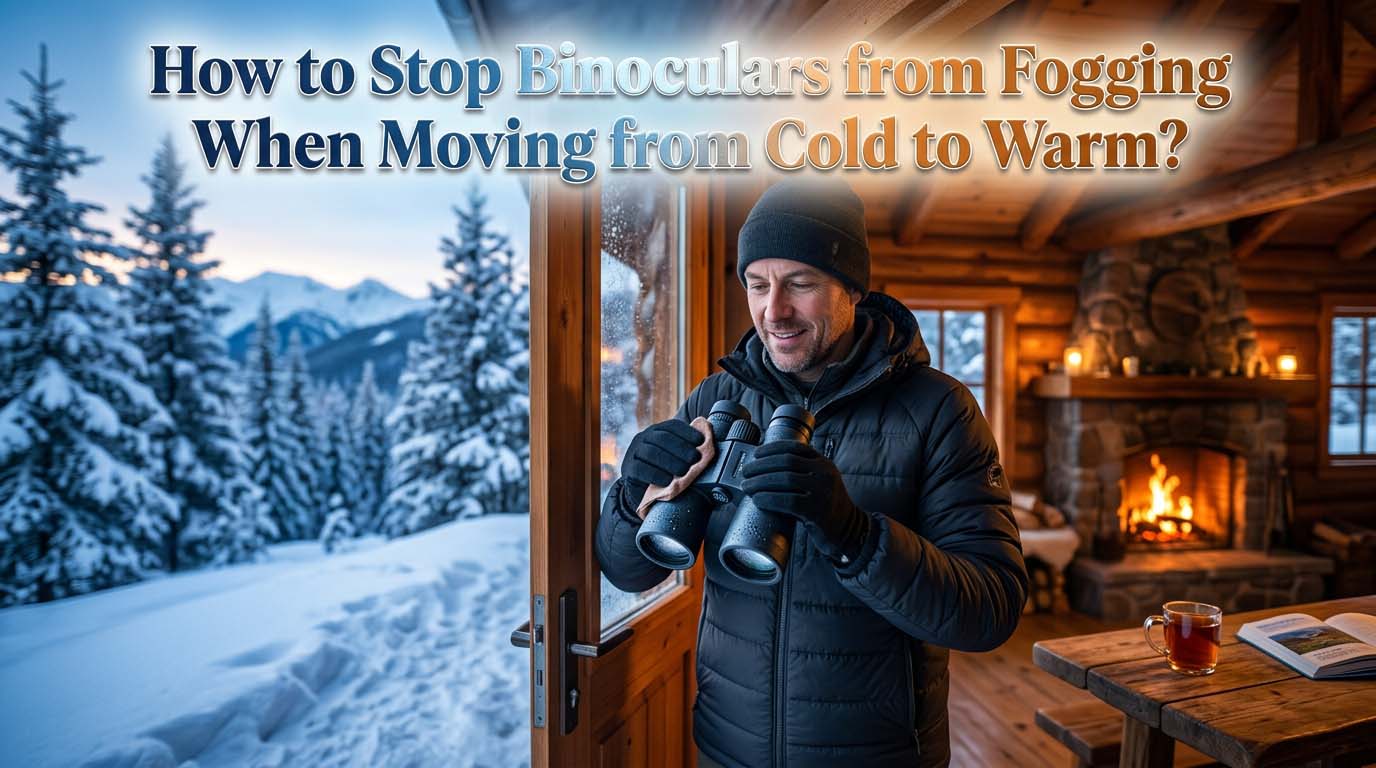
You step out of a warm truck into a cold, damp morning. A bull elk steps into a clearing. You raise your binoculars. All you see is a gray, blurry mess. Fog. It happens in seconds, and it ruins the moment.
This guide gives you the exact actions to take so your binoculars stay clear when moving from cold to warm. I have dealt with this problem in the field for years. Here is what actually works.
Why Moving from Cold to Warm Is the Worst Case for Fog
Fog is just condensation. The glass of your binoculars is cold. The air around you is warm and full of moisture. When that warm, wet air hits the cold glass, the water vapor turns into tiny droplets. Those droplets scatter light. Your image turns to soup.
The bigger the temperature gap, the faster and thicker the fog forms. A slow, gradual change gives the glass time to warm up. A sudden change, like walking from a heated car into a cold marsh, creates instant fog.
There are two kinds of fog. Knowing the difference saves you time and money.
- Surface fog. This is on the outside of the lenses. You can wipe it off. An anti-fog treatment can stop it. This is the kind this guide solves.
- Internal fog. This is moisture trapped inside the binocular barrel. It means the factory seal has failed. No spray or wipe can fix it. You need to send the binoculars to the manufacturer for repair. If your binoculars are advertised as “fogproof,” internal fog is a defect.
Before you do anything else, confirm your fog is on the surface. If you wipe it and it clears for a second, it is surface fog. That is the problem we are solving here.
The Two-Layer Defense: Temperature First, Then Treatment
Anti-fog treatments are powerful, but they have a limit. If the temperature difference between your binoculars and the air is too large (roughly over 20°F or 11°C), even the best anti-fog will struggle. The surfactant layer gets overwhelmed by the sheer volume of condensation.
The first layer of defense is always temperature management. The second layer is the anti-fog treatment. You cannot skip the first step and expect perfect results.
Method 1: The Body-Heat Trick (0 to 2 Minutes)
This is the fastest way to warm your binoculars. It works in under a minute.
- Before you step out of the warm vehicle or building, tuck the binoculars under your jacket, against your chest or stomach.
- Button or zip your jacket over them.
- Walk to your spot. Your body heat warms the metal and glass slowly, preventing the sudden shock that causes heavy fog.
- When you are ready to glass, pull them out. They will be near your body temperature. The temperature gap is much smaller, so fog is much less likely.
This trick also works if you are moving from a cold outside spot into a warm cabin. Just tuck them under your jacket for a minute before you go inside.
Method 2: The Sealed-Bag Method (5 to 10 Minutes)
This is for larger optics or when you have a few minutes to plan. It is the most reliable way to prevent fog without using your body heat.
- Place your binoculars (or spotting scope) inside a large ziplock bag or a dry stuff sack.
- Squeeze as much air out as possible. Seal it.
- Move the sealed bag from the cold environment into the warm one.
- Wait 5 to 10 minutes.
- The air inside the bag warms up slowly. The cold glass warms up at the same rate as the air around it. Since no new moisture-laden air can touch the glass, condensation does not form.
- Remove the binoculars from the bag. They will be the same temperature as the air. They will not fog.
I have used this trick on hunting trips for years. It works every single time.
Method 3: The Passive Warm-Up (15+ Minutes)
This is the standard advice you read everywhere. It works, but only if you have time.
- Leave your binoculars in their case, with a silica gel desiccant pack inside.
- Place the case in a warm environment (truck cab, cabin, house).
- Wait at least 15 minutes. The case slows down the temperature change, acting like a buffer.
- Open the case and use it.
This is slow but very safe. It is the best option when you are not in a rush.
How to Apply Anti-Fog So It Actually Works
Anti-fog treatment is your second layer. You apply it before the problem starts, not after you see fog.
The key step most people miss: Clean the lenses first. Dirt, oil, and fingerprints block the anti-fog from bonding to the glass. If you skip this step, the anti-fog beads up and fails quickly.
Step-by-Step Application
- Blow off any loose dust or grit from the lenses using a blower brush.
- Apply a lens-safe cleaning solution to a microfiber cloth. Wipe the lenses clean. Let them dry.
- Now, apply the anti-fog. Use a paste for long-lasting protection (several days of use) or a spray for a quick touch-up.
- Buff in gentle circles with a clean microfiber cloth. Rub until the surface goes from cloudy to crystal clear.
- Do not wipe again later. The layer is still active even when dry.
Treat both the objective lenses (the big ones) and the eyepieces (the small ones you look through). The eyepieces fog first because they are close to your warm, moist face. Focus your attention there.
A single paste treatment usually lasts through a weekend of heavy use. A spray treatment might need a refresh after a few hours in very damp conditions.
The Emergency Fix: When You Are Already in the Field
Sometimes you cannot plan. You are cold, you walk into a warm hut, and your binoculars fog instantly. Here is what to do in 30 seconds.
- Do not breathe on the lenses. Your breath is warm and moist. It adds more moisture to the glass. It makes the fog worse.
- Wipe the condensation off with a dry microfiber cloth. This removes the surface water, but the glass is still cold.
- Use a hand warmer. Hold it near the eyepiece for 20 to 30 seconds. The gentle warmth raises the glass temperature just enough to reduce the temperature gap. Do not touch the lens with the hot pack.
- After the brief warm-up, apply an anti-fog wipe if you have one. If not, hold the binoculars under your jacket against your body for another minute.
- Pull them out. They will stay clear much longer.
If you have no hand warmer and no anti-fog, the only fix is the body-heat trick. Tuck them under your jacket for a full minute before wiping them again. The warmth is what solves the problem.
Long-Term Habits That Prevent Fog Every Time
A few storage and handling habits make a big difference across an entire season.
- Keep them in a temperature-stable place. Do not leave binoculars in a hot car or a freezing shed. The more stable the temperature, the less shock they face.
- Store with a desiccant. Silica gel packs inside the case absorb moisture. Replace them every few months or when they change color.
- Treat lenses weekly during fog-prone seasons. Do not wait until the morning of your trip. A quick paste treatment every Friday night means you are covered for Saturday and Sunday.
- Never seal them away wet. If you got caught in rain or heavy dew, dry the binoculars with a cloth before putting the caps or case back on. Trapping moisture inside just makes the next fog worse.
Myths That Can Ruin Your Lens Coatings
There is a lot of bad advice online. Here is what not to do.
- Do not breathe on the lens and wipe it. This adds moisture. It also deposits oils from your mouth. Over time, it can damage the anti-reflective coatings.
- Do not use spit or dish soap. Spit wears off in minutes and is not clean. Dish soap can contain degreasers that attack the delicate multi-coatings on your lenses.
- Do not assume “fogproof” means no fog at all. This term only applies to the internal seals. It means moisture cannot get inside the barrel. It does nothing to stop surface condensation.
Pro Hunter’s 10-Second Fix for the Truck-to-Cold Transition
This is a method I have used for years. It takes almost no time and works better than anything else I have tried.
- Before you step out of the warm truck, roll down the window halfway.
- Hold your binoculars out the window for 10 seconds. The cold air hits them first. This pre-cools the body of the optic slightly. It sounds backward, but it actually reduces the shock.
- Bring them back in and tuck them under your jacket against your body.
- As you walk to your spot, the binoculars warm up slowly from the cold baseline to your body temperature.
- Treat the eyepieces with an anti-fog wipe while you walk.
The result is a binocular that is warm, but not hot, and has a thin layer of anti-fog. It will not fog for the rest of your outing.
Frequently Asked Questions
Can I use a hair dryer to warm my binoculars quickly?
No. Rapid, uneven heat from a hair dryer can damage the internal seals and the lens coatings. The heat can also cause the lubricants inside the focusing mechanism to thin out or migrate. Body heat or ambient air is the only safe way to warm them.
Will anti-fog stop fogging if I bring binoculars from an air-conditioned house into a humid summer morning?
Yes. The same principle applies. The temperature difference is usually smaller than winter transitions, but the humidity is higher. A paste treatment plus the body-heat trick will handle it easily.
How do I clean anti-fog residue after it wears off?
Use a standard lens cleaning solution and a microfiber cloth. Gently wipe until the surface is clean and dry. Do not re-apply anti-fog over old, worn-off residue. It will not bond properly. Clean first, then treat again.
Does anti-fog work on eyepieces and objectives equally?
Yes, but the eyepiece is the priority. The objective lens faces away from your face and usually gets less direct moisture. The eyepiece is right next to your warm, humid breath. Treat the eyepieces first and most frequently.
What if my binoculars fog on the inside after moving from cold to warm?
That is a seal failure. The factory seal has broken, and humid air has entered the nitrogen-purged chamber. No external treatment fixes this. Contact the manufacturer immediately. This is a warranty issue for almost all quality binoculars.