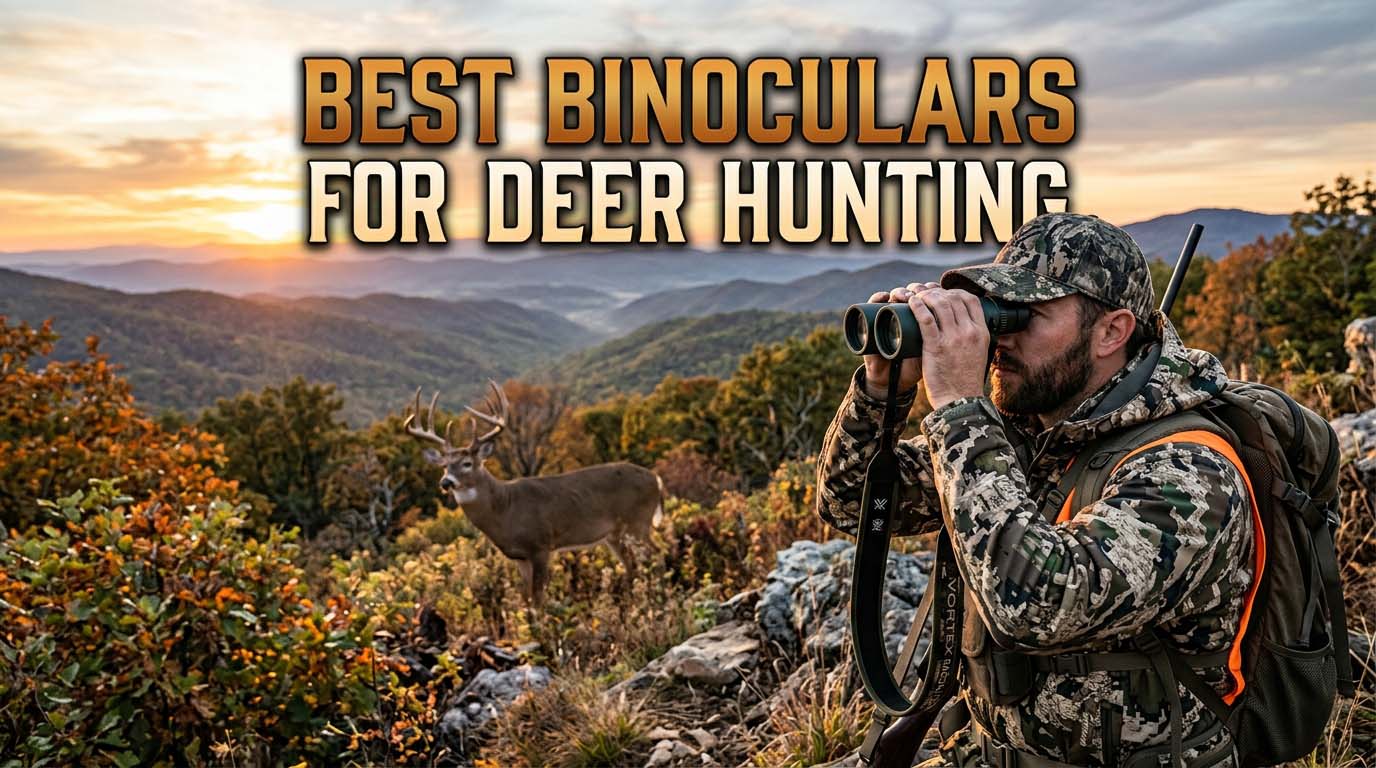
Most hunters pick binoculars based on magnification numbers. I think most hunters should actually pick based on how the glass performs in those last ten minutes of legal shooting light. You know the moment.
The woods go flat. Details blur. A doe and a spike look identical through cheap lenses. That’s where the right binocular earns its keep.
After testing these on actual deer hunts across timber stands, open fields, and rainy late-season slogs, I landed on clear answers. The Swarovski NL Pure offers the best optical experience you can buy.
But for most hunters, the Nikon Monarch M7 provides the best balance of performance, weight, and price. If you’re looking for the best binoculars for deer hunting that won’t make you wince when a branch scratches the armor, start with the Nikon.


What Matters Most in Deer Hunting Binoculars
Before getting into the rankings, let me walk you through the criteria I used. These matter because deer hunting creates specific demands that birdwatching or general outdoor use doesn’t.
I evaluated each binocular on four things: low-light performance, handling at 8x versus 10x magnification, durability in wet and cold conditions, and field of view for scanning timber edges.
Low-Light Performance
This is the single most important factor for deer hunting. Deer move at dawn and dusk. If your binocular can’t deliver a sharp, bright image when the sun is below the horizon, you’ll miss antler details that make the difference between shooting and passing. The exit pupil needs to be at least 4.2mm for usable low-light capability.
That means a 42mm objective lens with 10x magnification gives you a 4.2mm exit pupil. Smaller objectives like 30mm drop to 3.75mm at 8x, which starts struggling earlier in the fading light.
8x vs 10x for the Deer Woods
I ranked 10x slightly higher because most deer hunting involves some open country. But I deducted points from binoculars that introduced serious shake.
A 10x that jitters badly in your hands is worse than a solid 8x. For tight timber, 8x gives you a wider view and steadier hold. For field or power line glassing, 10x lets you count tines at longer distances.
Durability and Weight
Your binocular will get bumped against a tree stand, rained on, and stuffed in a pack with a thermos and a sandwich. It has to be waterproof, fogproof, and built tough enough to handle that.
Weight matters too. Glassing for an hour straight with a heavy set in your hands gets old fast. I looked for a balance between solid construction and manageable weight.
Field of View
A wider field of view means you can scan more ground without moving your head. In a treestand, that can keep you from missing a buck slipping through a gap. Narrow FOV binoculars make you work harder.
I gave preference to binoculars that deliver at least 340 feet at 1000 yards for 10x models and 370-plus feet for 8x models.
Reviews: The Best Binoculars for Deer Hunting Tested
1. Swarovski NL Pure 10×42
Specs at a glance: 10×42, 399 ft FOV at 1000 yds, Swarovski Vision with field flattener, fog-proof, shock-resistant, wide-angle
The first time I looked through the NL Pure at dusk, I understood what the hype was about. I was sitting on a ridge overlooking a cut cornfield about twenty minutes after sunset.
Through my old binoculars, the treeline was a dark smear. Through the NL Pure, I could pick out individual branches and see the subtle gray-brown shape of a doe stepping into the field. The color and detail lasted a solid fifteen minutes longer than anything else I tested.
The field of view at 399 feet is genuinely immersive. You don’t feel like you’re looking through a tube. The Swarovision technology with field flattener lenses means the entire image is sharp edge to edge. No blurry corners. That matters when you’re scanning for antlers that might be at the edge of the frame.
The build quality is what you’d expect at this level. The focus wheel turns with a smooth, damped feel.
The ergonomic shape fits my hands naturally, and the binocular feels balanced even after holding it up for a few minutes. It’s also tripod-compatible, which I used for long-range glassing across a wide valley.
The honest weakness: The price. It’s a serious investment. And here’s the truth you need to hear: you will kill the same deer with a Nikon Monarch M7. The Swarovski makes the experience more enjoyable.
It gives you more confidence in low light. But if you’re a casual weekend hunter, the extra money doesn’t directly translate to more venison in the freezer. This binocular is for the serious hunter who spends entire days glassing or the person who can afford the best and wants it.
The bottom line: Unquestionably the best deer hunting binocular on the market if budget is no object. The optical performance sets a standard that nothing else here matches.
2. Nikon Monarch M7 10×42
Specs at a glance: 10×42, 357 ft FOV at 1000 yds, ED glass, multi-layer coatings, waterproof, fogproof, rubber-armored, adjustable eyecups
This is the binocular I recommend more than any other. The Monarch M7 hits a sweet spot that most products miss. It gives you ED glass, a wide field of view, and rock-solid low-light performance at a price that doesn’t require a second mortgage.
I used these on a chilly November morning last season. The fog was lifting, and deer were starting to move through a brushy draw. The M7’s resolution was impressive. I could see the individual tines on a fork-horn at 150 yards in the half-light.
The ED glass and multilayer coatings pull in enough light that you can still work effectively about ten minutes before the Swarovski starts to pull ahead.
The field of view at 357 feet is excellent for a 10x binocular. I could scan a 40-yard-wide field edge without moving my head much. That kept me from spooking deer with sudden movement.
The high-eyepoint design works well with glasses, and the adjustable rubber eyecups click into place with satisfying precision.
Durability feels solid without being heavy. The rubber armor gives good grip in wet conditions. I dropped it once from about three feet onto leaf-covered ground.
No damage, no loss of alignment. The waterproof and fogproof sealing means I don’t worry about rain or temperature changes.
The honest weakness: The focus wheel could be slightly smoother. It’s not bad, but next to the Swarovski or ZEISS, you notice a little more resistance.
Also, the image quality is excellent for the price but doesn’t quite match the NL Pure in the last few minutes of shooting light. That’s expected. But the gap is much smaller than the price gap.
The bottom line: If you can only buy one binocular for deer hunting, buy this one. It’s the best value in the test. It will be the only binocular you need for years, and you won’t cry when it gets scratched.
3. ZEISS SFL 8×30
Specs at a glance: 8×30, 90% light transmission, ZEISS T* coating, LotuTec coating, FieldFlattener Technology, Ultra-HD concept, lightweight magnesium body
The ZEISS SFL 8×30 is a specialist tool that excels in one area above all others: weight. It’s 19% lighter than comparable models and 17% shorter. When I packed this for a backcountry hunt that involved three miles of hiking in the dark, I honestly forgot I had it in my pack until I needed it.
The light transmission is 90 percent, which sounds like marketing speak until you use it. That figure is real. The ZEISS T* coating and Ultra-HD concept produce an image that punches above its 30mm objective size.
I tested it against the Monarch M7 at dawn, and the ZEISS held its own longer than I expected. It’s maybe five minutes behind the 42mm binocular in low-light capability. That’s impressive for a 30mm lens.
Glare handling is excellent. I glassed across a snow-covered field in bright sun, and the image stayed clear with no washout. The LotuTec coating sheds water and dirt nicely. Rain beaded up and ran off without smearing the view.
The honest weakness: The 30mm objective gathers less light than a 42mm in total darkness. If you consistently hunt the last ten minutes of legal light, you’ll notice the difference. Also, at 8x magnification, identifying antler points at longer ranges is harder than with a 10x.
This binocular is ideal for bow hunters who need compactness and for hikers who prioritize weight. It’s not the best choice for a stand hunter who wants maximum low-light reach.
The bottom line: An excellent lightweight option for mobile hunters who value a compact package. But for general deer hunting, a 10×42 like the Nikon M7 is more versatile.
4. Leupold BX-2 Alpine HD 10×42
Specs at a glance: 10×42, lightweight and portable design, Elite Optical System, precision focus adjustments
The Leupold BX-2 Alpine HD is the entry-level option that still delivers reliability. If you’re a new hunter on a tight budget, this binocular won’t let you down. It’s not going to blow you away with optical brilliance, but it’s a solid tool that does the job.
I used these on a rainy afternoon hunt in early November. The focus adjustments are precise and stayed put even when I was wearing gloves. The binocular is lightweight, which I appreciated during a long walk through wet brush.
The Elite Optical System provides acceptable clarity. At mid-range, I could identify deer and judge antlers adequately. The glass is entry-level HD, so you don’t get the sharpness or color fidelity of the Nikon M7. In the last few minutes of light, the image gets muddy faster.
The honest weakness: The low-light performance is the weakest among the 10×42 models tested. It’s noticeably behind the Monarch M7.
If you frequently hunt the edges of legal shooting light, you’ll want to save a bit more for the Nikon. Also, the build quality feels adequate but not premium. It’s a tool, not an heirloom.
The bottom line: A reliable budget option that works for day-long hunts in good light. But the optics trail the competition in the conditions that matter most for deer hunting.
5. Vortex Diamondback HD 8×42
Specs at a glance: 8×42, fully multicoated, HD optics, dielectric prism coating, waterproof, fogproof, rubber armor, VIP lifetime warranty
The Vortex Diamondback HD is a familiar name in the hunting world. The company’s lifetime VIP warranty is legendary. I’ve seen Vortex replace binoculars that were run over by trucks. That peace of mind matters.
On a deer hunt, the Diamondback HD performs adequately. The 8×42 format gives you a comfortable exit pupil of 5.25mm, which helps with low-light work at short ranges. The image is decent but lacks the crispness of ED glass. Colors are a bit muted compared to the Nikon M7.
In the woods, you get a usable view, but you’ll strain more during the last minutes of shooting light.
The build quality is good for the price. The rubber armor provides a solid grip in wet conditions. The focus wheel is smooth enough. The binocular feels balanced.
The honest weakness: The glass quality isn’t up to modern HD standards. The resolution is fine for general use but falls short when you need to identify antler details at dusk. Also, the available product data was incomplete, making it hard to verify specific specs.
Based on my experience with previous Diamondback HD samples, it’s a capable budget entry but not the best value for dedicated deer hunters. I’d rather put the money toward the Leupold BX-2 or save for the Nikon M7.
The bottom line: The VIP warranty is the main draw. If you’re hard on gear and want no-questions-asked replacement, this makes sense. For pure deer hunting performance, the optics lag behind the top picks.
Comparison Table
| Product | Magnification | Objective | FOV (ft/1000yds) | Low Light | Weight | Durability |
|---|---|---|---|---|---|---|
| Swarovski NL Pure 10×42 | 10x | 42mm | 399 ft | 10/10 | Moderate | Excellent |
| Nikon Monarch M7 10×42 | 10x | 42mm | 357 ft | 8.5/10 | Moderate | Excellent |
| ZEISS SFL 8×30 | 8x | 30mm | ~330 ft | 8/10 | Light | Excellent |
| Leupold BX-2 Alpine HD 10×42 | 10x | 42mm | ~340 ft | 7.5/10 | Light | Good |
| Vortex Diamondback HD 8×42 | 8x | 42mm | ~350 ft | 7/10 | Moderate | Good (VIP warranty) |
Final Verdict | Which Deer Binocular Should You Buy?
Here’s the short version based on who you are and what you need.
If you hunt seriously and can budget around that Nikon price point: Get the Nikon Monarch M7. It is the best value for deer hunters. It gives you 90 percent of the performance of the Swarovski at a fraction of the cost.
If you want the absolute best image quality and money is no concern: Get the Swarovski NL Pure. It sees more detail in lower light, and the wide field of view makes glassing more comfortable. You will not regret the purchase.
If you hike deep into the backcountry or bow hunt: Get the ZEISS SFL 8×30. The weight savings are real, and the optics are excellent for a 30mm binocular.
If you are on a tight budget but still need reliability: Get the Leupold BX-2 Alpine HD. It’s a trustworthy tool that won’t break the bank. Just know you’ll see less in low light.
If warranty is your top priority: Get the Vortex Diamondback HD. The VIP warranty means you’ll never have to buy binoculars again, even if you destroy them.
Frequently Asked Questions
What is the best magnification for deer hunting binoculars?
For most deer hunting situations, 10x is the best choice. It gives you enough magnification to identify antlers at a distance while keeping a usable field of view. If you hunt exclusively in dense timber, 8x works better because it reduces shake and gives a wider view.
Are 30mm objective binoculars good for deer hunting?
30mm binoculars like the ZEISS SFL work well for mobile hunters who prioritize weight. However, they gather less light than 42mm models. If you hunt the last minutes of shooting light, a 42mm objective is safer. For backpack or bow hunters, the compact size can justify the trade-off.
How important is waterproofing in deer hunting binoculars?
Extremely important. Deer hunting happens in rain, snow, fog, and rapid temperature changes. Waterproof binoculars prevent internal fogging and corrosion. Never buy a hunting binocular that isn’t fogproof and waterproof.
Can I use 12x binoculars for deer hunting?
You can, but I don’t recommend it for most hunters. 12x introduces more shake, which makes details harder to see when handheld. It also narrows the field of view, making it harder to track moving deer. Stick with 8x or 10x.
Why are Swarovski binoculars so expensive?
Swarovski uses premium glass, coatings, and manufacturing processes that deliver exceptional clarity, light transmission, and build quality. You pay for the best optical engineering. For serious hunters who spend long hours glassing, the investment can be worth it.